United vs Delta
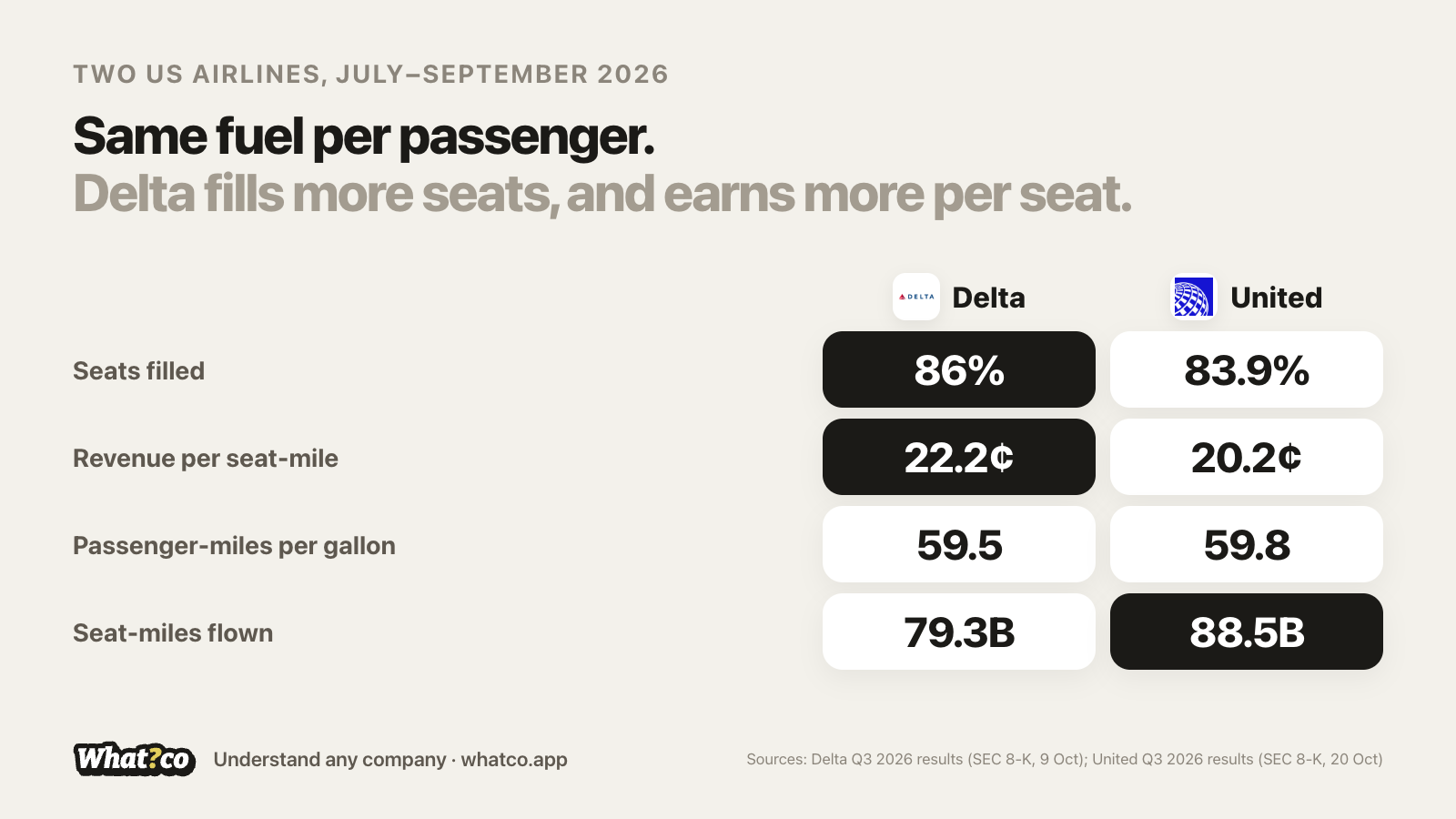
Same fuel per passenger. Delta fills more seats and earns more on each; United flies 12% more.
Delta
Delta is a large U.S. network airline that flies passengers and cargo worldwide and earns extra from premium cabins, miles sold to American Express, and its own refinery and engine repair business.
Open profile →United
United is one of the largest airlines in the world, flying passengers and cargo from seven U.S. hubs to more than 380 destinations and earning extra from its MileagePlus loyalty program.
Open profile →| Delta | United | |
|---|---|---|
| Revenue, Q3 2026Delta: excluding $2.6B of fuel its refinery sold to third parties ($20.2B including it). United: total operating revenue. | $17.6B | $17.9B |
| Revenue growth vs Q3 2025Delta: excluding refinery sales (+21% including them). | +16% | +17% |
| Pre-tax profit, adjustedEach company's own adjusted figure. As reported (GAAP): Delta $1.1B, United $1.3B. | $1.5B | $1.1B |
| Pre-tax margin, adjustedAs reported (GAAP): Delta 5.3%, United 7.3%. | 8.5% | 6.2% |
| Available seat milesSeats flown times miles: the size of the schedule. | 79.3B | 88.5B |
| Revenue passenger miles | 68.1B | 74.3B |
| Seats filled (load factor) | 86% | 83.9% |
| Revenue per seat mileDelta: adjusted TRASM, excluding refinery sales. | 22.18¢ | 20.19¢ |
| Revenue per passenger mile (yield)Passenger revenue only: what a passenger pays per mile flown. | 22.80¢ | 21.86¢ |
| Fuel price per gallonDelta: adjusted, including a 13¢ benefit from its own refinery ($3.80 as reported). | $3.61 | $3.90 |
| Fuel used | 1,146M gal | 1,243M gal |
| Passenger miles per gallon of fuelRevenue passenger miles divided by fuel gallons used; our arithmetic from each release. | 59.5 | 59.8 |
| Reliability, as each claims itDelta: first in on-time arrivals and departures among six US airlines (FlightStats). United: lowest seat cancellation rate of the three largest US airlines. Different measures, so not a head-to-head. | Most on-time | Fewest cancellations |
In July–September United was the bigger airline: it flew 88.5 billion available seat miles against Delta's 79.3 billion, 12% more, and carried a record 49.5 million passengers. Revenue ended up almost level: $17.9 billion at United, $17.6 billion at Delta once the fuel Delta's own refinery sells to other companies is left out.
Profit went the other way. On each company's adjusted figures Delta made $1.5 billion before tax, 8.5% of revenue, and United $1.1 billion, 6.2%. Delta filled more of its seats (86% against 83.9%) and earned more per seat mile (22.18 cents against 20.19). On reported (GAAP) figures the order flips, United $1.3 billion and Delta $1.1 billion, because of one-off items: gains on asset sales at United, investment and hedge losses at Delta.
Look at efficiency and the gap disappears: both airlines carried almost exactly 60 passenger miles per gallon of fuel (59.5 at Delta, 59.8 at United). The difference in profit comes from what each seat earns, not from how the planes burn fuel: 22.18 cents per seat mile at Delta against 20.19 at United.
Fuel was the quarter's story for both. Jet fuel cost about 60% more than a year earlier. Delta paid $3.61 a gallon after a 13-cent benefit from the refinery it owns; United paid $3.90. Revenue per seat mile rose 15–16% at each, which is how both stayed profitable with fuel this expensive.
Both expect the December quarter to be stronger still: Delta guides to revenue growth of about 20%, United to more than 20%.
Every number on this page comes from the two companies' own filings.
Compare any two companies.
Open Delta or United in Whatco, put them side by side on any metric, and get the full story of each in 12 chapters.
Download on the App Store